
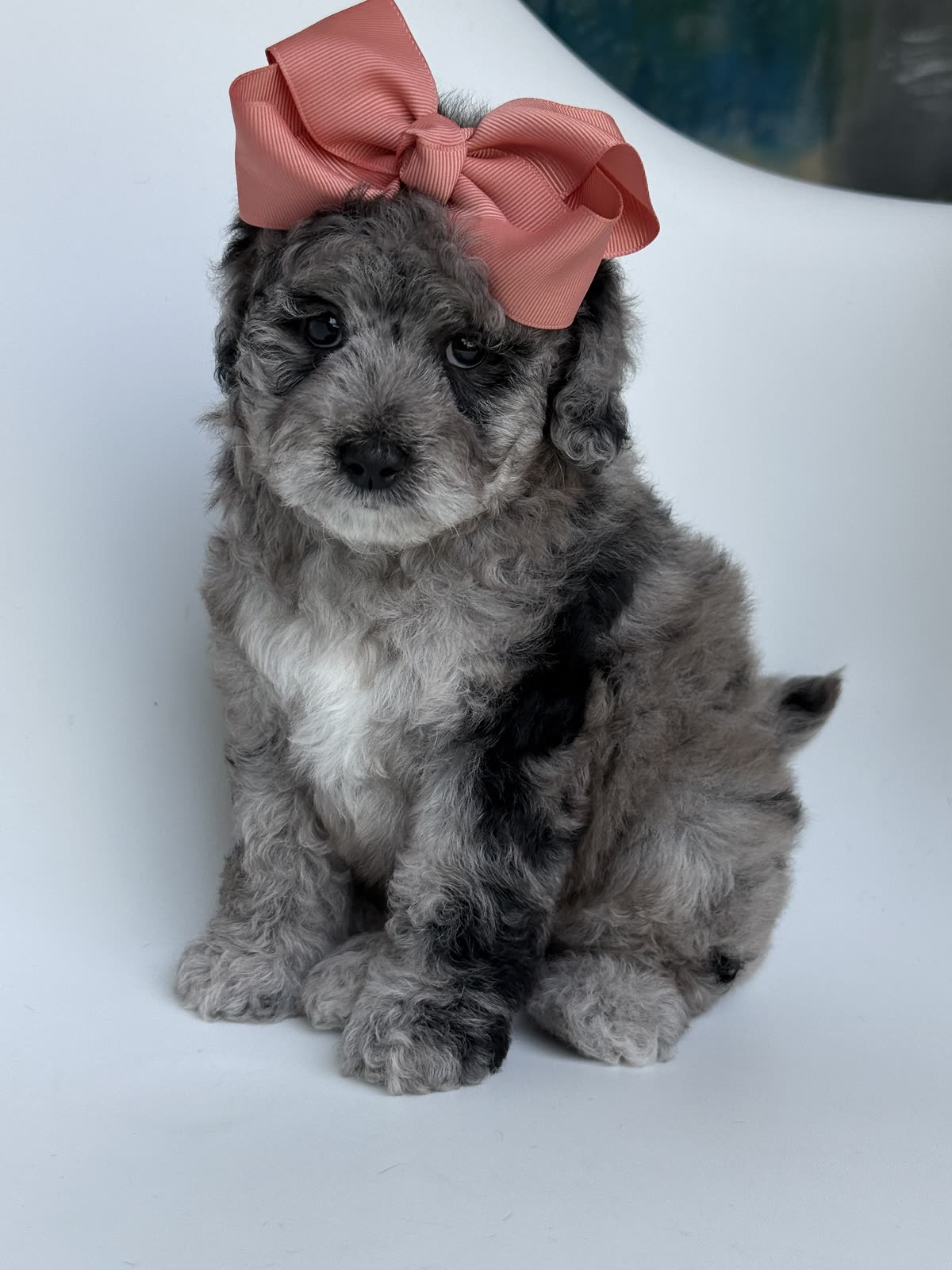
Mini Goldendoodles: Full Grown Size, Price and Temperament
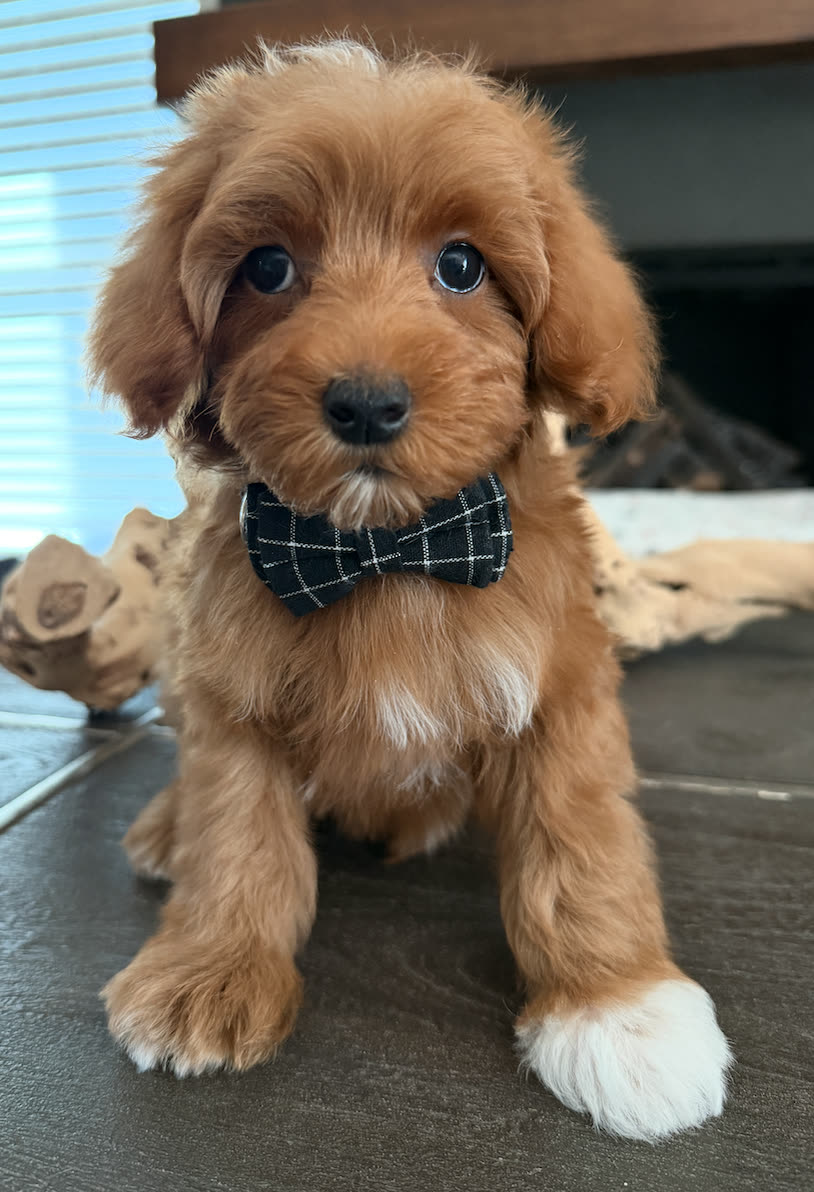
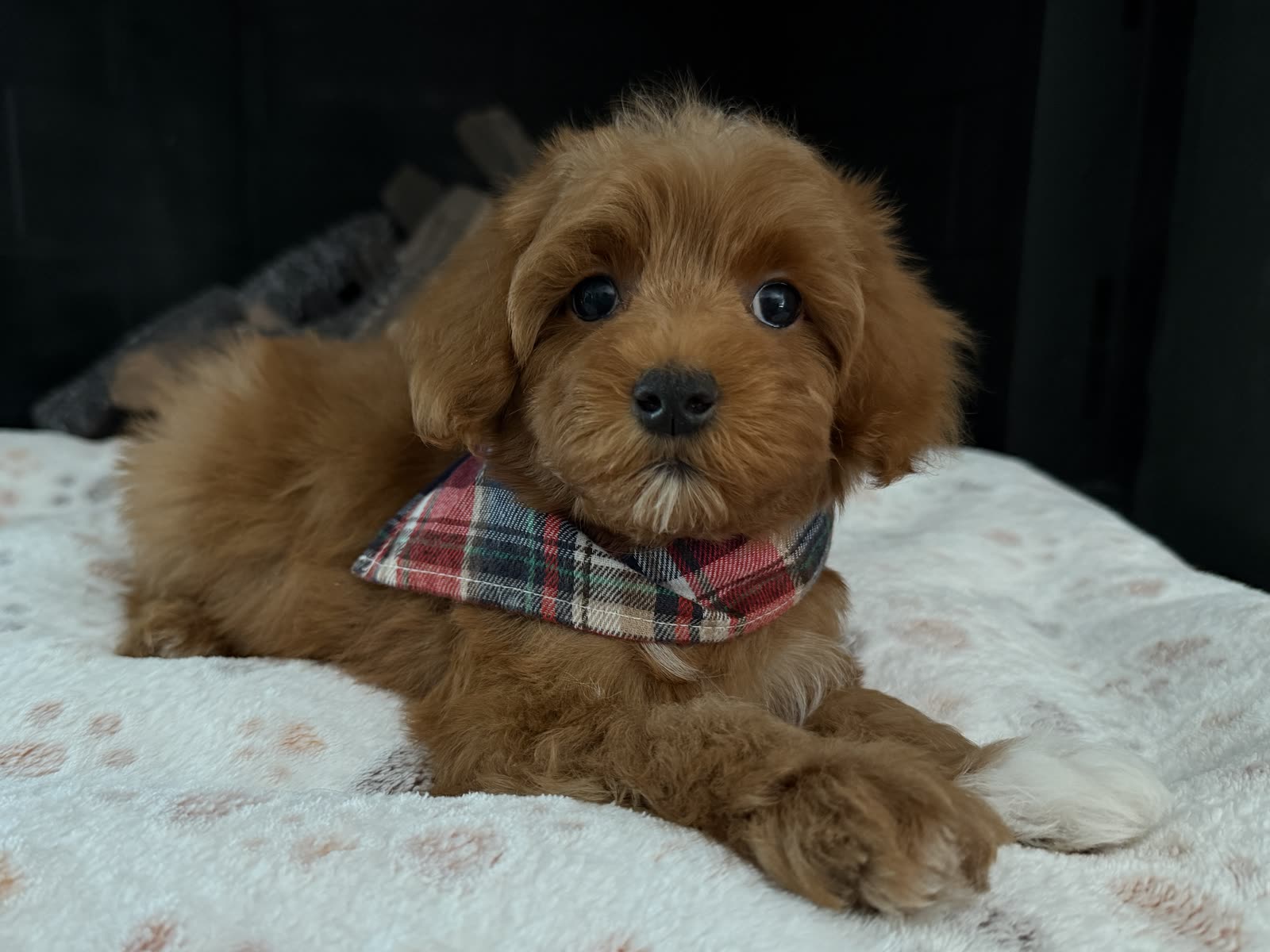
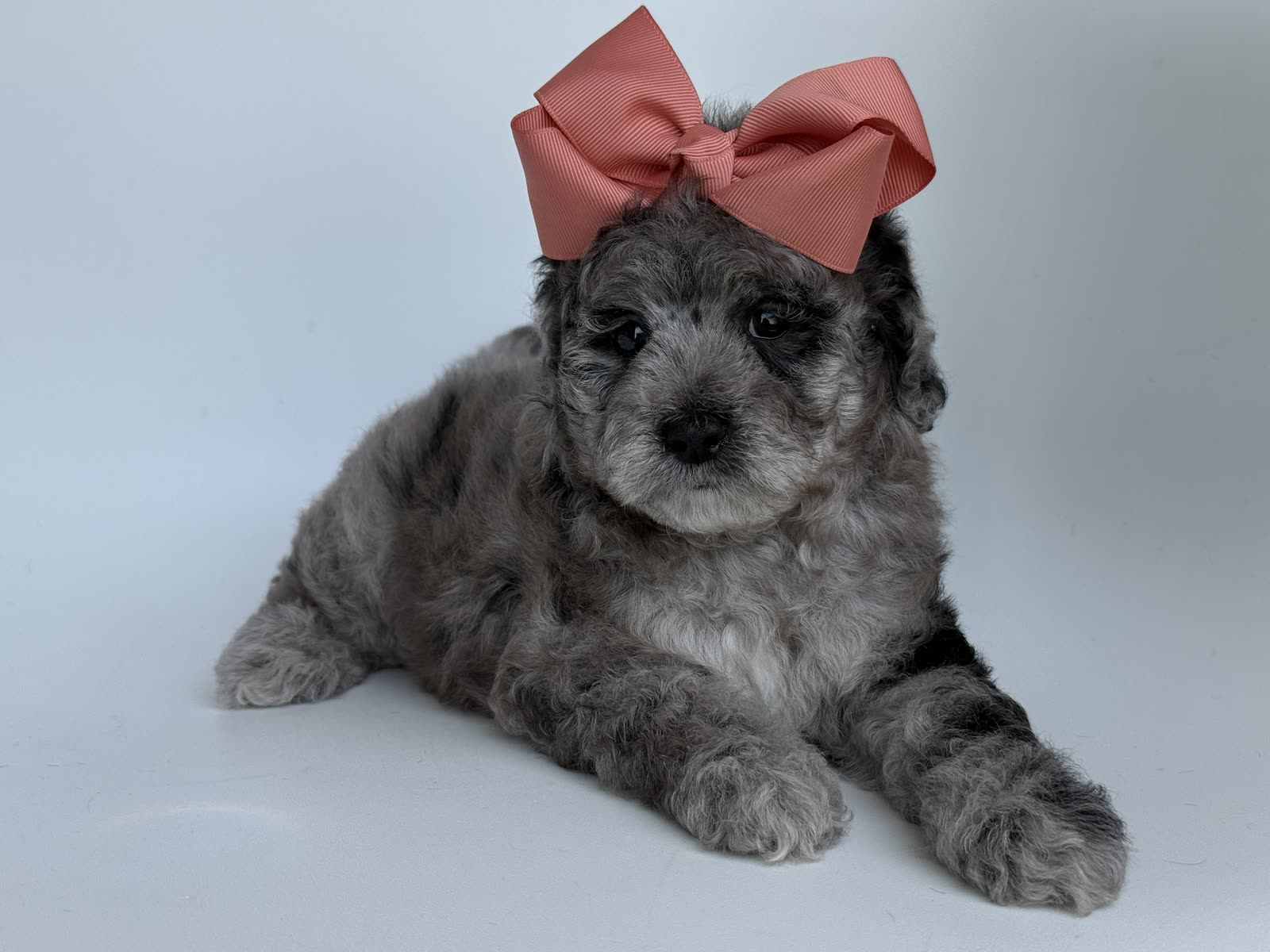
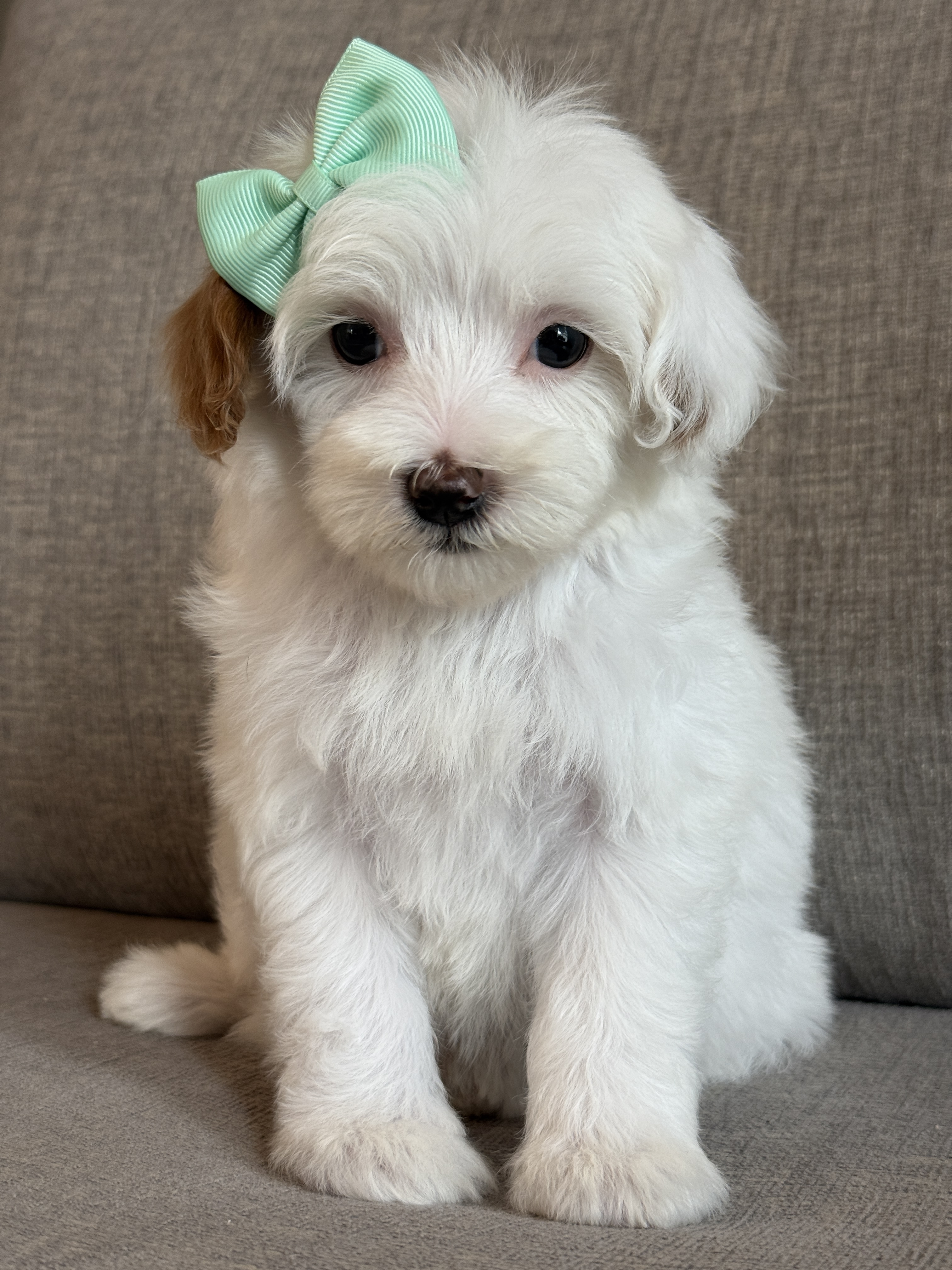
A mini Goldendoodle is a Golden Retriever crossed with a miniature Poodle, weighing 20 to 35 pounds full grown and standing 14 to 17 inches at the shoulder. They live 12 to 16 years and are one of the most popular family dogs in the country.
What "mini" actually means
There is no kennel club standard for Goldendoodle sizes, because the Goldendoodle is a crossbreed rather than a recognised breed. Size names are breeder conventions, not rules. Most careful programs use roughly these ranges:
- Micro or teacup: 10 to 20 lbs, 10 to 14 inches
- Mini: 20 to 35 lbs, 14 to 17 inches
- Medium: 35 to 50 lbs, 17 to 21 inches
- Standard: 50+ lbs, 21+ inches
Because these are conventions, a puppy advertised as a mini elsewhere can finish anywhere from 18 to 40 pounds depending on whose definition is in use. The label alone tells you very little. The parents tell you almost everything.
How big do they get?
Most mini Goldendoodles reach full height by about 9 to 11 months and fill out to their adult weight by 12 to 14 months. Males usually finish a few pounds heavier than females from the same litter. A rough rule of thumb: a puppy at 16 weeks is close to half its adult weight.
Size chart by age
Typical weights for a mini that will finish around 28 pounds: 8 weeks, 5 to 8 lbs. 12 weeks, 9 to 13 lbs. 16 weeks, 13 to 17 lbs. 6 months, 19 to 24 lbs. 9 months, 24 to 29 lbs. 12 months, 26 to 32 lbs and at or near full size. Growth is fastest between 8 and 16 weeks and slows sharply after six months.
Predicting adult size from the parents
Adult size is driven mainly by the two parents, and secondarily by the generation. A Golden Retriever crossed with a miniature Poodle produces a different curve than an F1 Goldendoodle crossed back to a toy Poodle.
A reasonable working estimate is the average of the two parents' adult weights, give or take about 20 percent. If the dam is 30 lbs and the sire is 20 lbs, expect most of that litter to land between 20 and 30 lbs.
Ask any breeder for the actual adult weights of both parents, not just the expected weight of the puppy. A program that cannot tell you what its own dogs weigh is guessing. You can meet ours on our studs and dams page.
Why size estimates go wrong
Three things throw off predictions more than anything else.
The Poodle variety is unclear. Toy, miniature and moyen Poodles differ substantially. A litter described as mini but sired by a moyen Poodle will trend toward medium. Ask which variety is in the pedigree.
Early generations vary more. First-generation crosses show the widest spread within a single litter. Multigenerational breedings are more predictable, because the traits have been stabilised over several generations. If a tight size range matters to you, multigen is the safer bet.
Free feeding. A mini kept at a healthy body condition will weigh meaningfully less than the same dog free-fed. Some of the difference between a 28 lb and a 35 lb adult is management, not genetics.
What they cost
Mini Goldendoodles typically cost $1,500 to $4,000 from a breeder nationally. Our mini and micro puppies are $2,500 to $5,500, and size is not what sets the price - it comes down to genetics, lineage, coat, generation, and rights. Budget for the first year too: food, grooming every six to eight weeks, vaccinations and spay or neuter usually add $1,500 to $2,500.
You will also see mini Goldendoodles listed well below that range. Those listings usually come from high-volume commercial kennels, brokers reselling litters they did not raise, or classified sites that vet neither the seller nor the dog. A low price is not automatically a red flag, but a low price with no health testing, no health guarantee and no way to meet the parents almost always is.
The gap is not markup. Testing a breeding pair for hips, elbows, eyes, heart and a full genetic panel costs well over a thousand dollars before a puppy is ever born, and dogs that fail come out of the program. Add veterinary care before go-home, eight weeks of daily handling and socialisation, and a guarantee that actually pays out, and the difference accounts for itself. Ours is set out on our health guarantee page.
Questions worth asking before you reserve
- What are the actual adult weights of the dam and sire?
- Which Poodle variety is in the pedigree - toy, miniature or moyen?
- What did the previous litter from this pairing finish at?
- What health testing has been done on both parents, and may I see the results?
- What exactly does the health guarantee cover, and for how long?
A breeder who answers all five specifically is telling you something useful about how the program is run.
Temperament
Friendly, eager to please, and easy to train - the Golden Retriever brings the patience and the Poodle brings the intelligence. They are patient with children and get along with other pets. Expect 45 to 60 minutes of exercise a day, and know that they would rather not be left alone all day. A small Goldendoodle is not a low-energy Goldendoodle.
Do they shed?
Very little, and how little depends on the coat. Curly coats shed least and suit allergy households best. Wavy coats, the most common, shed lightly. Coat type follows generation, so an F1B or multi-gen puppy is a safer bet than an F1 if shedding is the deciding factor. Our guide to F1 versus F1B for allergy families goes into the trade-offs.
Read the full guide
For the complete breakdown - generations explained, lifespan and health, and how minis compare to micro and standard - read our full guide: Mini Goldendoodles: Size, Price and Full Grown Weight.
Call 214-405-8853 or text 817-919-0935, or see available puppies.

.png)


