
F1 vs F1B vs Multigen Goldendoodles: Best for Allergies
If someone in your home reacts to dogs, one decision matters more than any other: the generation of the puppy you choose. F1, F1B, F1BB, multigen - these are not marketing terms. They describe how much Poodle is in the cross, and Poodle coat is the entire reason Goldendoodles get recommended to allergy families.
Here is the short version: multigenerational Goldendoodles have the most consistent low-shedding coats of any generation. If allergies are the deciding factor in your home, multigen is the answer, and it is not close.
Why generation decides the coat
The Golden Retriever side brings the temperament. The Poodle side brings the coat. Every generation label is simply a shorthand for how much Poodle is in the mix, and the more Poodle there is, the tighter and lower-shedding the coat becomes - and the more reliably it turns out that way across a whole litter.
Consistency is the thing people underestimate. It is not enough for a generation to sometimes produce a low-shedding puppy. You need the generation that produces one nearly every time.
F1: the gamble
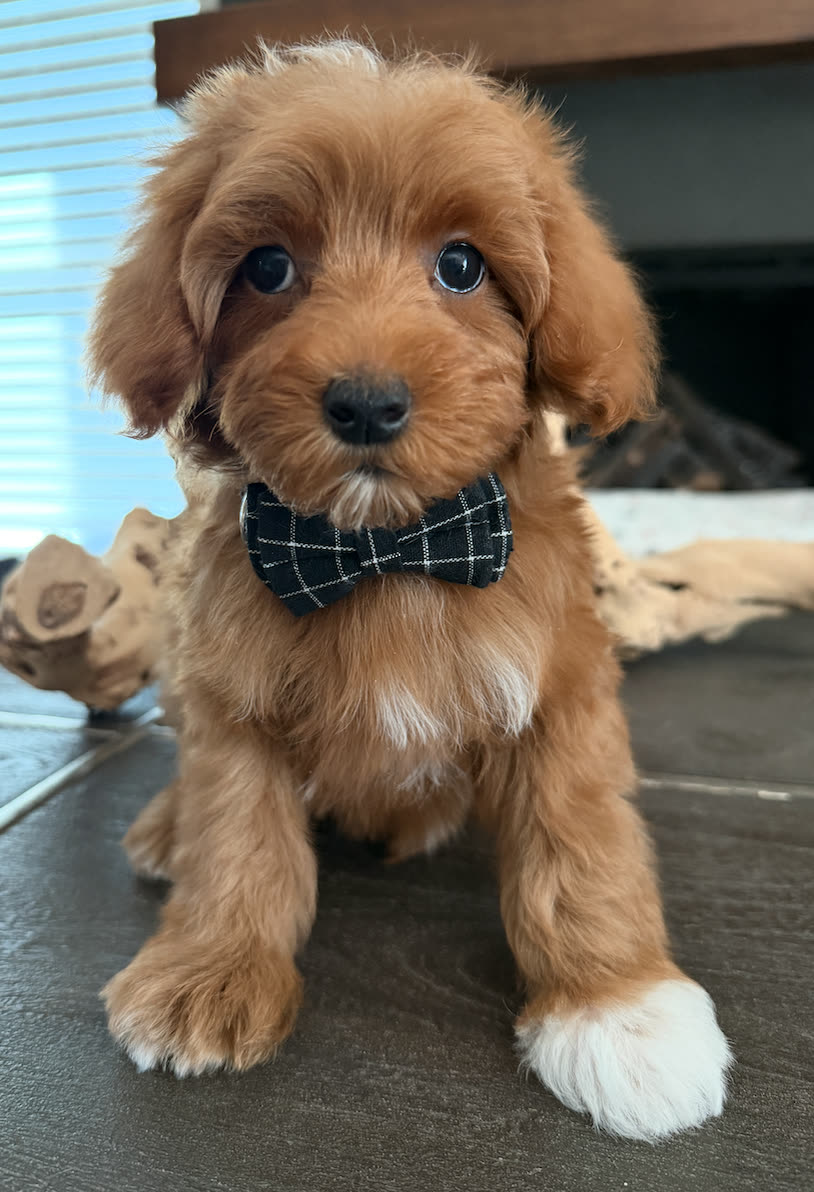
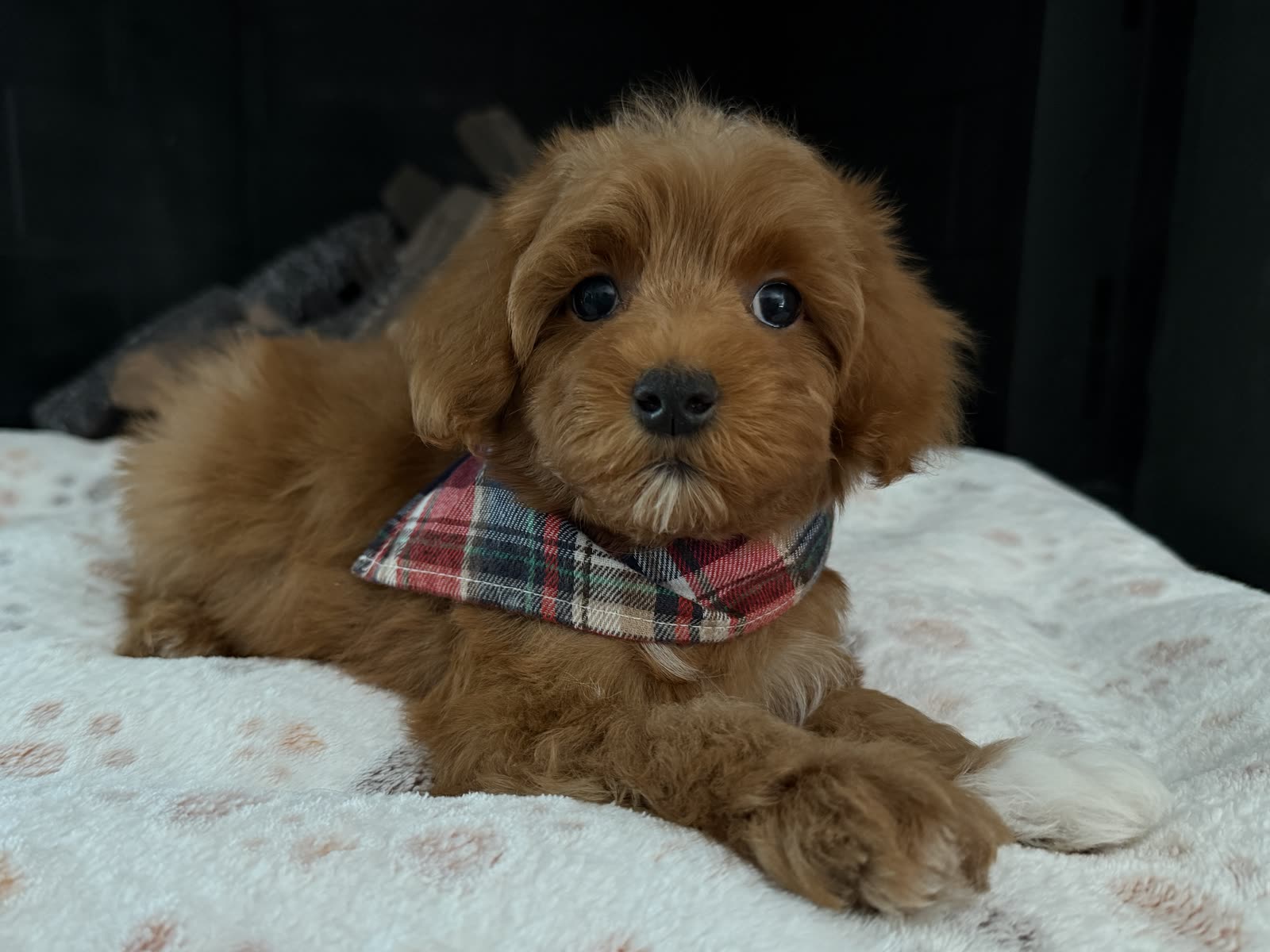
A first-generation cross - Golden Retriever x Poodle, 50 percent each. F1s have the classic shaggy look and often show hybrid vigour.
For allergy households, F1 is the least predictable option available. Coats within a single F1 litter range from wavy and low-shedding to noticeably straight and shedding. Two puppies from the same litter, raised side by side, can differ completely. You will not know which one you got until the adult coat comes in at around a year old - long after the dog is part of the family.
If shedding matters to you, we would steer you away from F1.
F1B: a real improvement
An F1 bred back to a Poodle, roughly 75 percent Poodle. The higher Poodle percentage produces curlier, lower-shedding coats far more often than F1.
F1B is a genuine step up and suits many allergy families well. But it is still a backcross, not a stabilised line, and you will see some variation within a litter. It improves your odds considerably. It does not remove the guesswork.
Multigen: what we recommend
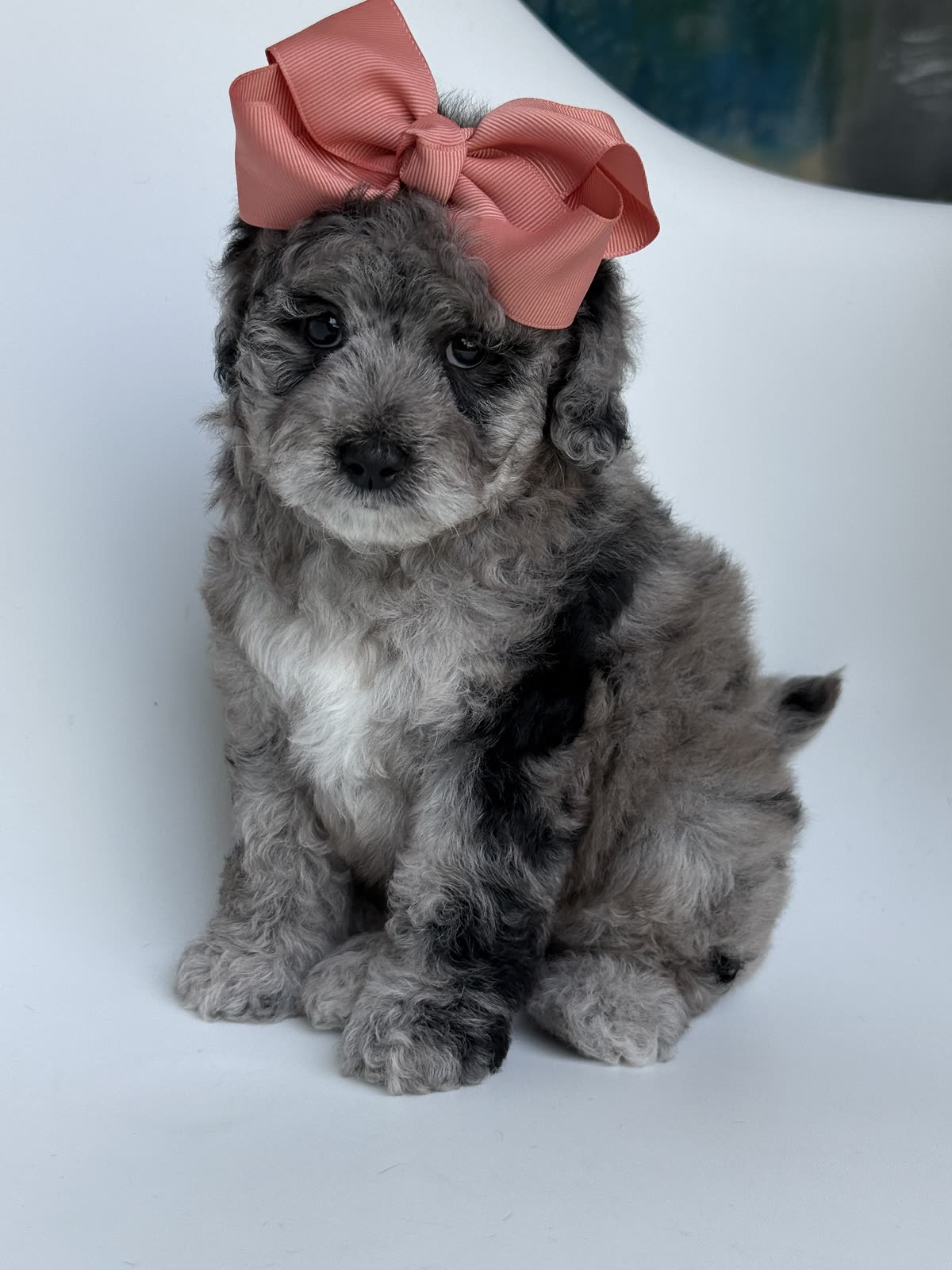
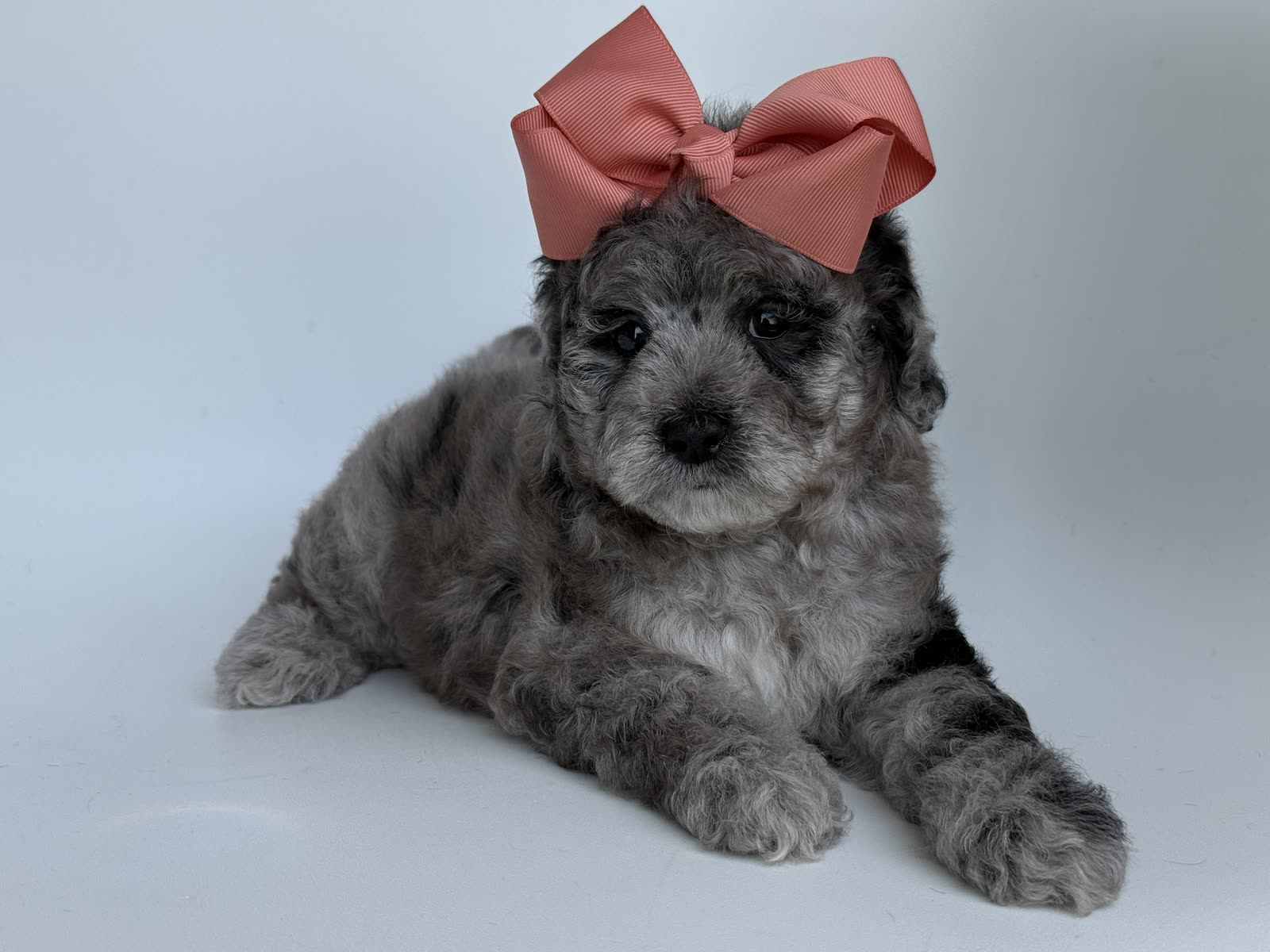
Multigenerational means the line has been bred Goldendoodle to Goldendoodle over several generations, with each pairing selected for coat, size and temperament.
That deliberate selection is what makes the difference. Instead of improving your odds one cross at a time, a multigen line has had the low-shedding coat locked in over generations. The result is the most predictable coat in the breed - curly or tightly wavy, minimal shedding, and consistent across the litter rather than a lottery.
For an allergy household, that predictability is the whole ballgame. You are not hoping for a good outcome. You are choosing a line that has already produced it repeatedly.
Multigen puppies also tend to be the most predictable for adult size, which matters if you are set on a mini or micro finishing in a specific range. Our mini Goldendoodle size and price guide covers how that works.
This is why we focus our program on multigen and F1BB pairings. If you want the lowest-shedding, most consistent Goldendoodle we can place with you, that is what we breed for.
How the generations compare
- F1 - 50 percent Poodle. Coat unpredictable, shedding varies widely within a litter. Weakest choice for allergies.
- F1B - about 75 percent Poodle. Usually curly and low-shedding, with some litter variation. A solid choice.
- F1BB - about 87 percent Poodle. Very consistent, very low shedding.
- F2 / F2B - variable. F2 reintroduces unpredictability; F2B pulls consistency back up.
- Multigen - several generations of selection. The most consistent and lowest-shedding coats in the breed. Our recommendation for allergy families.
What "hypoallergenic" honestly means
Worth being straight with you, because it affects how you plan.
Allergy reactions are triggered by proteins in dander and saliva, not by hair itself. A coat that holds onto its dander instead of shedding it around your home dramatically reduces what you are exposed to - which is why a well-bred multigen makes such a difference in practice, and why families who reacted to other dogs routinely do fine with one.
What no breeder can honestly promise is zero. Sensitivity varies enormously from person to person, and the most reliable thing you can do is spend real time with the specific puppy before you commit. We encourage that, and we would rather have the conversation up front than place a puppy that has to come back.
The grooming trade-off
Coats that shed least also mat fastest. The same tight curl that keeps dander out of your carpet needs brushing several times a week and professional grooming every six to eight weeks. Skip it and you get matting, which is uncomfortable for the dog and usually ends in a shave-down.
Budget for it. It is the honest cost of a low-shedding coat, and it applies to multigen most of all.
How to choose
- Start with multigen if anyone in the house reacts to dogs. Consistency is why.
- Ask what the line is - how many generations, and what the previous litters from this pairing produced.
- Meet the parents if you can, particularly the Poodle-side parent. You can see ours on our studs and dams page.
- Spend time with the specific puppy before committing.
- Talk to an allergist if reactions in your home have been severe.
See our multigen litters
We breed multigen and F1BB micro and mini Goldendoodles in Dallas, Texas, selected for coat consistency and temperament, and every puppy is covered by our health guarantee.
For the wider picture on generations, coats and sizes, read our guide to the types of Goldendoodles.
Call 214-405-8853 or text 817-919-0935, or see available puppies.

.png)
.jpeg)


